

Why we say “No” to the Dilute Gene
If you are looking to add a Labrador Retriever to your family, you have probably spent hours scrolling through puppy photos online. During your search, you might have stumbled across advertisements for “rare” Labradors with striking, exotic-sounding coat colors like silver, charcoal, or champagne.
These puppies are often sold at a premium price, marketed as unique status symbols. However, if you talk to preservation breeders or national breed clubs, they will strongly advise you to steer clear.
Here is why ethical breeders refuse to produce dilute coats, and why buying one might mean a lot of heartbreak and unexpected vet bills for your family.
1. You Risk Dealing with Lifelong Skin and Hair Problems
The most critical reason responsible breeders avoid the dilute gene is that it introduces a genetic health flaw. The gene responsible for these pale colors causes a chronic, uncurable condition called Color Dilution Alopecia (CDA).
In dilute dogs, the color pigment clumps together inside the hair shaft instead of spreading out evenly. This makes the hair incredibly brittle and weak. As a puppy grows into adulthood, this typically leads to:
- Progressive hair loss that usually starts on the back and can leave the dog mostly bald.
- Chronically dry, itchy, and flaky skin that causes the dog constant discomfort.
- Frequent skin infections (pyoderma) that require lifelong management with medicated shampoos and expensive antibiotics.
Good breeders prioritize a puppy’s quality of life over an unusual look. They believe it is unethical to intentionally breed a dog that faces a high risk of chronic physical discomfort.
2. Ethical Preservation: Developing Beautiful Shades Within the Standard
It is entirely possible to breed beautifully distinct, lighter-coated Labradors without introducing health flaws or crossing breed lines. In our own program, we have dedicated over 20 years to carefully developing our pale yellow coat line. The key difference is that this stunning, light shade is achieved strictly within the natural spectrum of the traditional yellow Labrador gene. By pairing standard-compliant lines with careful selection over two decades, we have been able to produce this breathtaking shade while preserving the rigorous AKC breed standard, structural soundness, and robust genetic health that Labradors are celebrated for. Some breeders have done the same thing by selecting darker yellow coats and marketing them as “Fox” Labs; genetically a “fox” Lab still has a yellow coat. This is why we don’t advertise our puppies as “Polar Boar” Labs – it is a marketing technique, not a breed standard. True preservation breeding enhances the breed’s natural beauty without ever sacrificing its integrity.
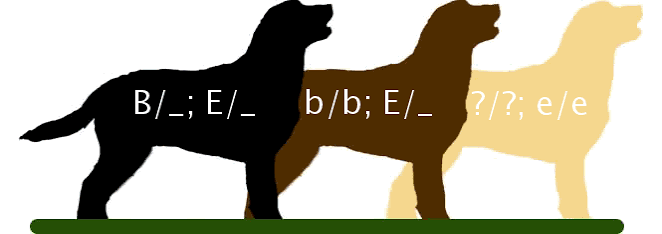
3. Coat Genetics: B, b, E and e!
Genetically speaking, purebred Labradors only carry the genes for three standard colors: black , yellow, and chocolate. The recessive dilute gene that creates silver (diluted chocolate), charcoal (diluted black), and champagne (diluted yellow) simply does not belong in the Labrador genome.
So, where did it come from? Geneticists and breed historians widely agree that the gene was introduced through historical outcrossing—meaning someone, decades ago, quietly mixed a Labrador with a different breed (most likely a Weimaraner) to get the color.
When you buy a dilute Labrador, you aren’t just getting an unusual color; you are getting a dog whose ancestral line compromised the health, genetic heritage, and predictable traits that make a Labrador a Labrador.
The two main genes that impact the Lab’s coat color are the TYRP1 gene and MC1R gene. Here’s a simple description of what they do:
- B Locus (TYRP1 gene): Controls the density of the dark pigment eumelanin.
- E Locus (MC1R gene): Controls whether that pigment is extended or blocked in the hair.
- E allows the black or chocolate pigment to show.
- e is recessive and blocks dark pigment entirely, turning the coat yellow.
4. The Altered Coat Fails at Its Actual Job
A Labrador’s coat is not just for aesthetics; it is a highly engineered piece of survival gear. Standard Labradors have a dense, weather-resistant, water-repellent double coat designed to protect them from freezing water, harsh weather, and thick brush.
Because the dilute gene damages the physical structure of the hair, dilute Labradors lose this built-in protection. Their coats easily absorb water and fail to regulate their body temperature properly, making them much more sensitive to extreme cold or wet weather.
5. It Shuts the Door on Major Kennel Club Approvals
If you ever want to participate in official dog sports, agility, obedience, or conformation shows, a dilute coat will hold you back. The Labrador Retriever Club (LRC) and major registries like the American Kennel Club (AKC) state clearly that black, yellow, and chocolate are the only acceptable colors. Any other shade is a disqualification.
While some breeders register silver dogs as “chocolate” to get around the system, doing so is widely considered a dishonest practice by the dog community.
6. Color-First Breeding Frequently Equals Neglected Health
Breeding healthy puppies requires an immense amount of work and money. Ethical breeders spend years testing their adult dogs for hip dysplasia, elbow dysplasia, eye diseases, and hereditary heart defects before ever planning a litter. They also carefully evaluate the parents’ temperaments to ensure the puppies will be stable, friendly family companions.
When a breeder’s primary goal is to produce a “rare” color that commands thousands of dollars, their priorities shift. Sadly, many “fad color” breeders skimp on crucial orthopedic and genetic testing. Because the gene pool for dilute colors is so small, they also frequently overlook behavioral flaws. This leaves unsuspecting puppy buyers at a much higher risk of ending up with a dog that suffers from severe separation anxiety, reactivity, or painful joint issues later in life.
The Bottom Line
When you bring a puppy into your home, you want a companion that is healthy, happy, and built to live a long, pain-free life. Ethical breeders dedicate their lives to protecting the Labrador Retriever by adhering strictly to the breed standard. By choosing a traditional black, yellow, or chocolate puppy from a health-tested litter, you are supporting responsible breeding practices and setting your family up for a lifetime of happy memories.